



Share this article

Reducing uncertainty on brownfield and development sites
Asbestos in soil can create significant health, environmental, commercial and programme risks. It may be encountered within made ground, demolition deposits, historic fill materials or areas where asbestos-containing products were previously stored, damaged or disposed of.
Unlike asbestos within a building, asbestos-contaminated soil is rarely uniform. Fragments and fibres may be distributed unevenly across a site, making representative investigation and careful interpretation essential.
How does asbestos enter the ground?
Asbestos may be present within soil as visible fragments of asbestos-containing material or as loose fibres and fibre bundles.
Common sources include:
- Historic demolition and poor site clearance
- Buried roofing sheets, insulation products and cement materials
- Fly-tipped construction waste
- Previous industrial processes
- Damaged underground services or ducts
- Reworked made ground containing building debris
- Cross-contamination during excavation and earthworks
Its presence may not be identified during an initial visual inspection, particularly where fragments are small, degraded or concealed below the surface.
Why early testing is important
Discovering asbestos after excavation has started can result in stopped works, restricted access, additional testing, changes to working methods and unexpected disposal costs.
Early investigation allows the project team to understand the potential extent and form of the contamination before major earthworks begin. This supports better planning and can help avoid treating all excavated material as presenting the same level of risk.
A proportionate testing strategy can provide the information required to:
- Define affected areas
- Inform the remediation strategy
- Develop safe systems of work
- Support material management decisions
- Identify suitable treatment or disposal routes
- Protect workers and nearby receptors
- Improve programme and cost certainty
Bulk fragment collection and analysis
Where suspect fragments are identified, representative samples can be collected and submitted for analysis to establish whether asbestos is present and identify the asbestos type.
Fragment analysis is an important part of the assessment, but it should be considered alongside the wider site history, ground conditions, distribution of materials and potential for loose fibres to be present.
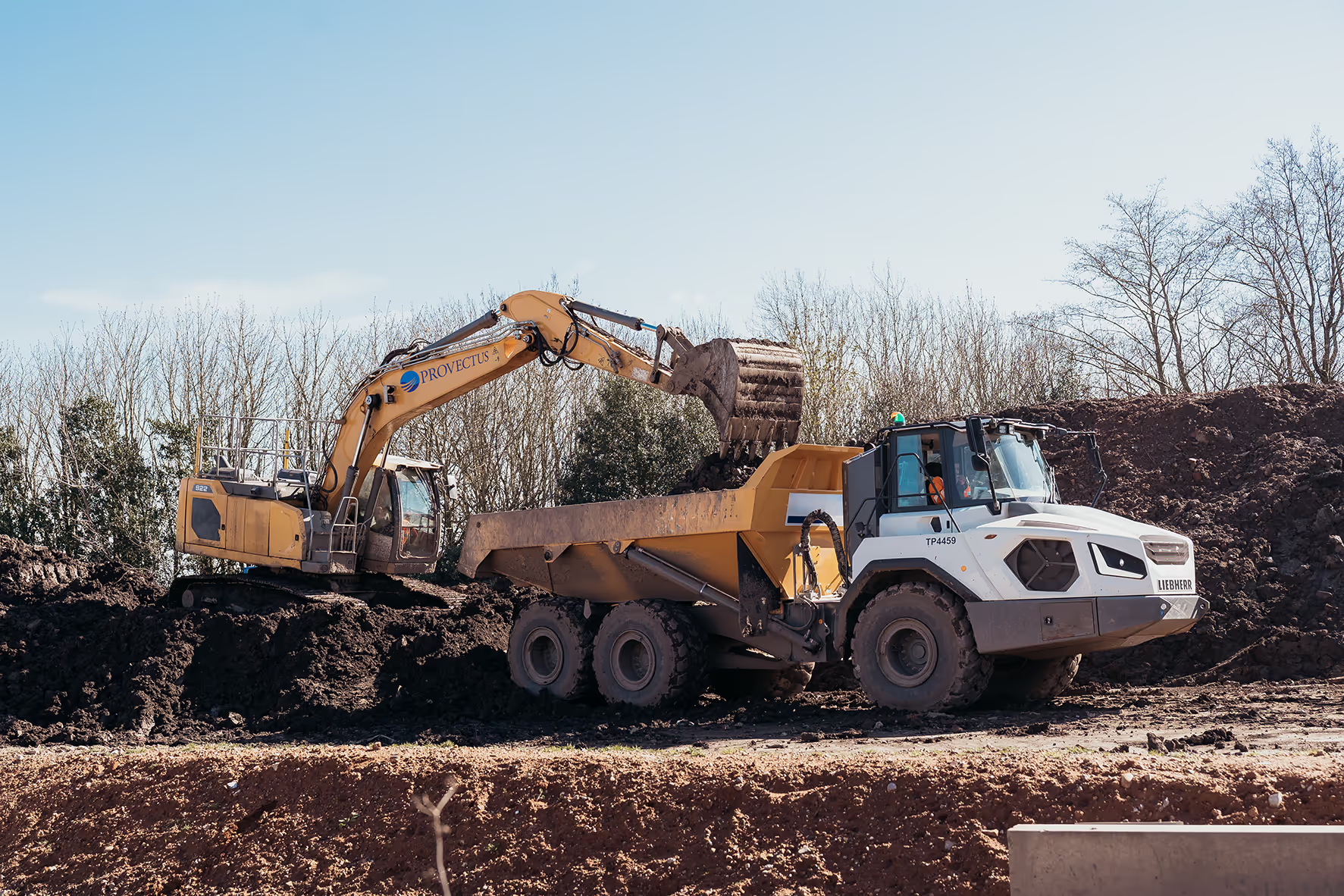
Results must be interpreted in the context of the proposed works. Excavation, screening, crushing and vehicle movements can all disturb contaminated materials and create a potential airborne fibre risk.
Integrating testing with site operations
The most effective asbestos-in-soils strategies are developed alongside the earthworks and remediation programme.
Testing can be coordinated with:
- Ground investigation
- Trial pitting and excavation
- Stockpile assessment
- Waste classification
- Remediation validation
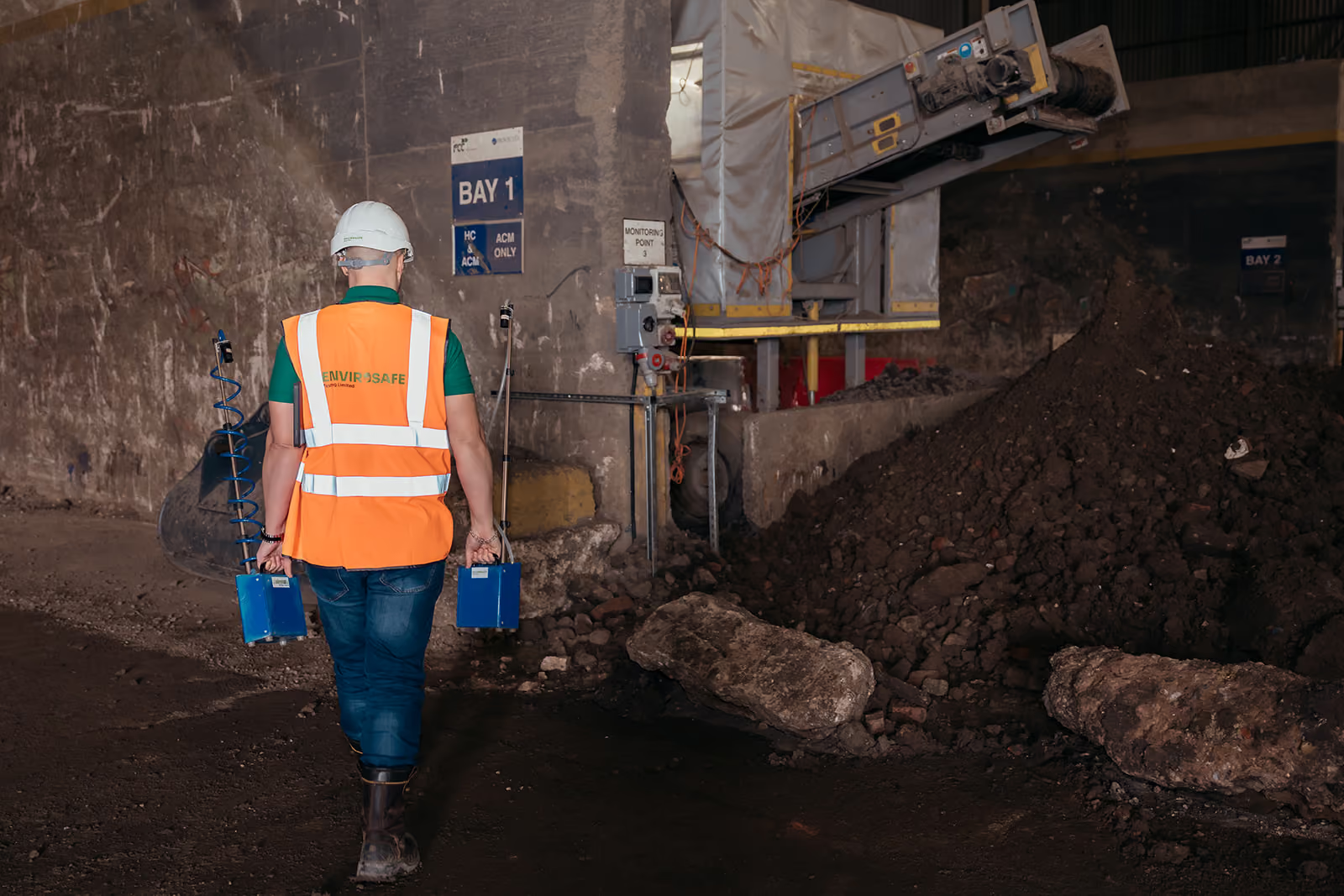
- Personal and perimeter air monitoring
- Material segregation and reuse planning
This integrated approach helps ensure that investigation findings can be translated into practical controls on site.
Envirosafe’s approach
Envirosafe supports developers, contractors and consultants with asbestos-in-soils sampling, fragment analysis, air monitoring and technical advice.
Our experienced analysts and mobile laboratory capability allow us to respond rapidly and provide support directly at the point of need. We focus on producing clear, defensible information that enables clients to manage risk without creating unnecessary delay or cost.
Suspect asbestos within made ground or excavated material? Speak to Envirosafe before work progresses. Early identification can protect people, reduce disruption and improve project certainty.



Careers
We pride ourselves on being at the forefront of the industry. We offer a dynamic and supportive work environment where innovation, collaboration, and professional growth are highly valued.


