

News & Insights
Understanding Asbestos Air Monitoring - Protecting People and Supporting Compliant Project Delivery
August 7, 2026
Matt Barrow

Share this article

Asbestos air monitoring measures the concentration of airborne fibres within a defined area. It provides objective evidence that control measures are working and helps protect employees, contractors, building occupants and surrounding communities.
Air monitoring may be required before, during or after asbestos-related activities. The appropriate monitoring strategy will depend on the nature of the work, the materials involved, site conditions and the potential for fibres to become airborne.
When is asbestos air monitoring required?
Air monitoring can support a wide range of situations, including:
- Refurbishment and demolition works
- Asbestos removal and remediation
- Accidental disturbance of suspected materials
- Work involving asbestos-contaminated soils
- Verification of control measures
- Investigation of concerns raised by workers or occupants
- Reoccupation of an area following asbestos-related activities
Early engagement with a competent analyst helps ensure the monitoring strategy reflects the actual risks and provides meaningful results.
Types of asbestos air monitoring
Background monitoring establishes existing airborne fibre concentrations before work begins. This provides a baseline against which later results can be assessed.
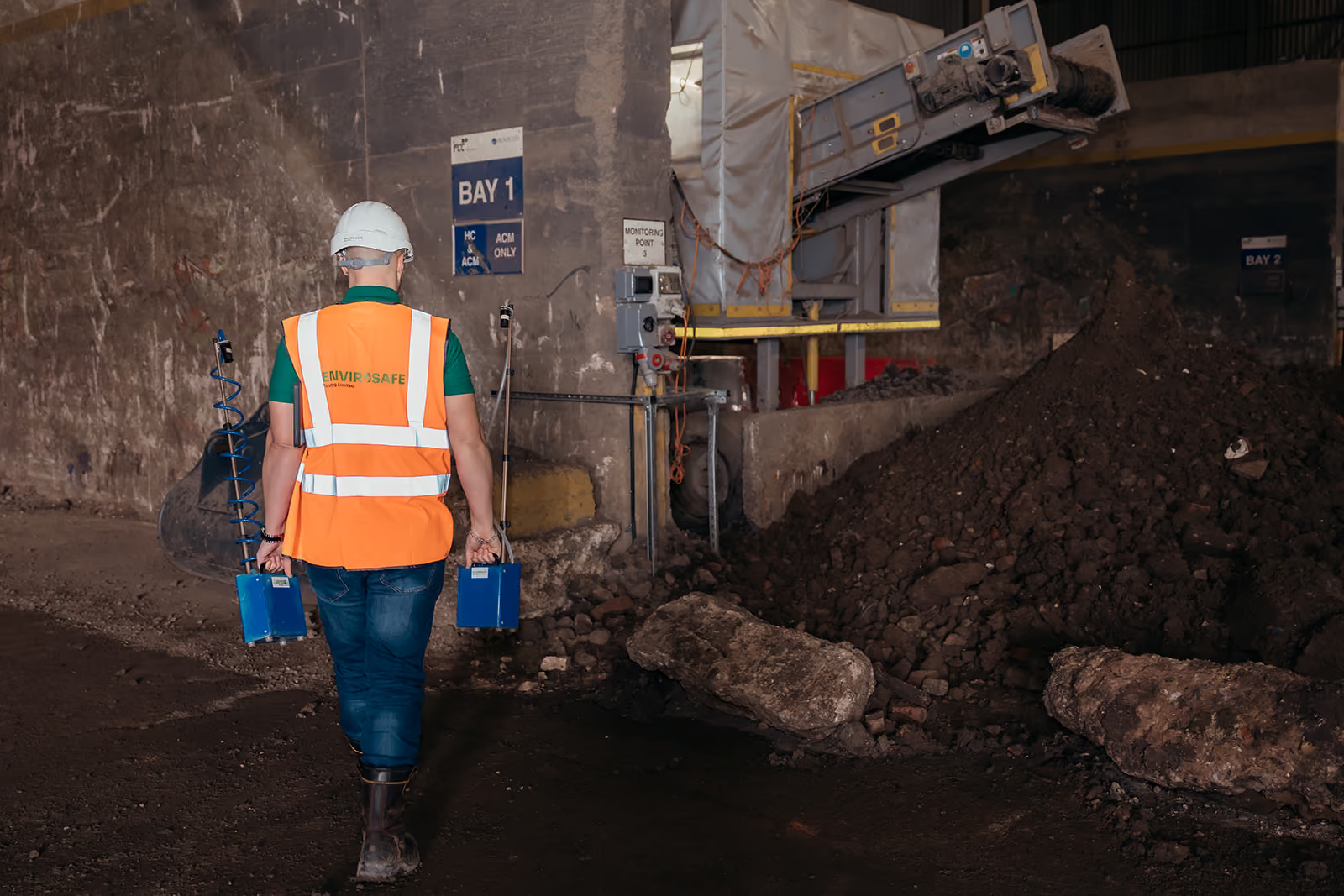
Personal exposure monitoring measures fibres within an operative’s breathing zone. It helps assess potential exposure and determine whether working methods, respiratory protection and other controls are effective.
Near-source monitoring is undertaken close to the work area to identify whether fibres are escaping from the immediate activity.
Perimeter or far-source monitoring is positioned further from the work area or close to the site boundary. It provides reassurance that fibres are not migrating into surrounding areas.
Reassurance monitoring is commonly completed following minor disturbance, maintenance or remedial works to confirm that airborne fibre concentrations remain at an acceptable level.
Why independent monitoring matters
Reliable air monitoring provides more than a test result. It helps clients demonstrate that risks are being actively managed and supports informed decisions throughout the project.
Clear and timely results can:
- Confirm whether control measures are effective
- Identify potential issues before they escalate
- Protect workers and third parties
- Support regulatory and contractual compliance
- Provide confidence before areas are returned to use
- Reduce unnecessary disruption and project delays
Responsive support from Envirosafe
Envirosafe provides asbestos air monitoring services across the UK, supported by experienced analysts and mobile laboratory capability. Our team can assist with planned works, ongoing monitoring programmes and urgent response requirements.
We provide clear reporting and practical technical advice, helping clients understand the results and determine the appropriate next steps.
Need asbestos air monitoring support? Contact Envirosafe for expert advice and a competitive quotation within 24 hours.



Careers
We pride ourselves on being at the forefront of the industry. We offer a dynamic and supportive work environment where innovation, collaboration, and professional growth are highly valued.


