

News & Insights
Bulk Sample Analysis: Accurate Identification for Safer Decision-Making
August 7, 2026
Matt Barrow


Share this article

Confirming whether materials contain asbestos
Materials suspected of containing asbestos cannot be reliably identified through visual inspection alone. Bulk sample analysis provides a clear assessment of whether asbestos is present and, where identified, the type of asbestos fibres contained within the material.
Accurate identification is essential before refurbishment, demolition, maintenance, remediation or intrusive works begin. It helps duty holders and project teams select appropriate controls, avoid accidental disturbance and make informed decisions about the management or removal of affected materials.
What is bulk sample analysis?
Bulk sample analysis involves collecting a small, representative section of a suspected asbestos-containing material and examining it under controlled laboratory conditions.
Samples may be collected from materials including:
- Insulation board and insulating products
- Textured coatings
- Cement sheets, panels and pipes
- Floor tiles and associated adhesives
- Roofing products
- Gaskets, ropes and seals
- Sprayed coatings and thermal insulation
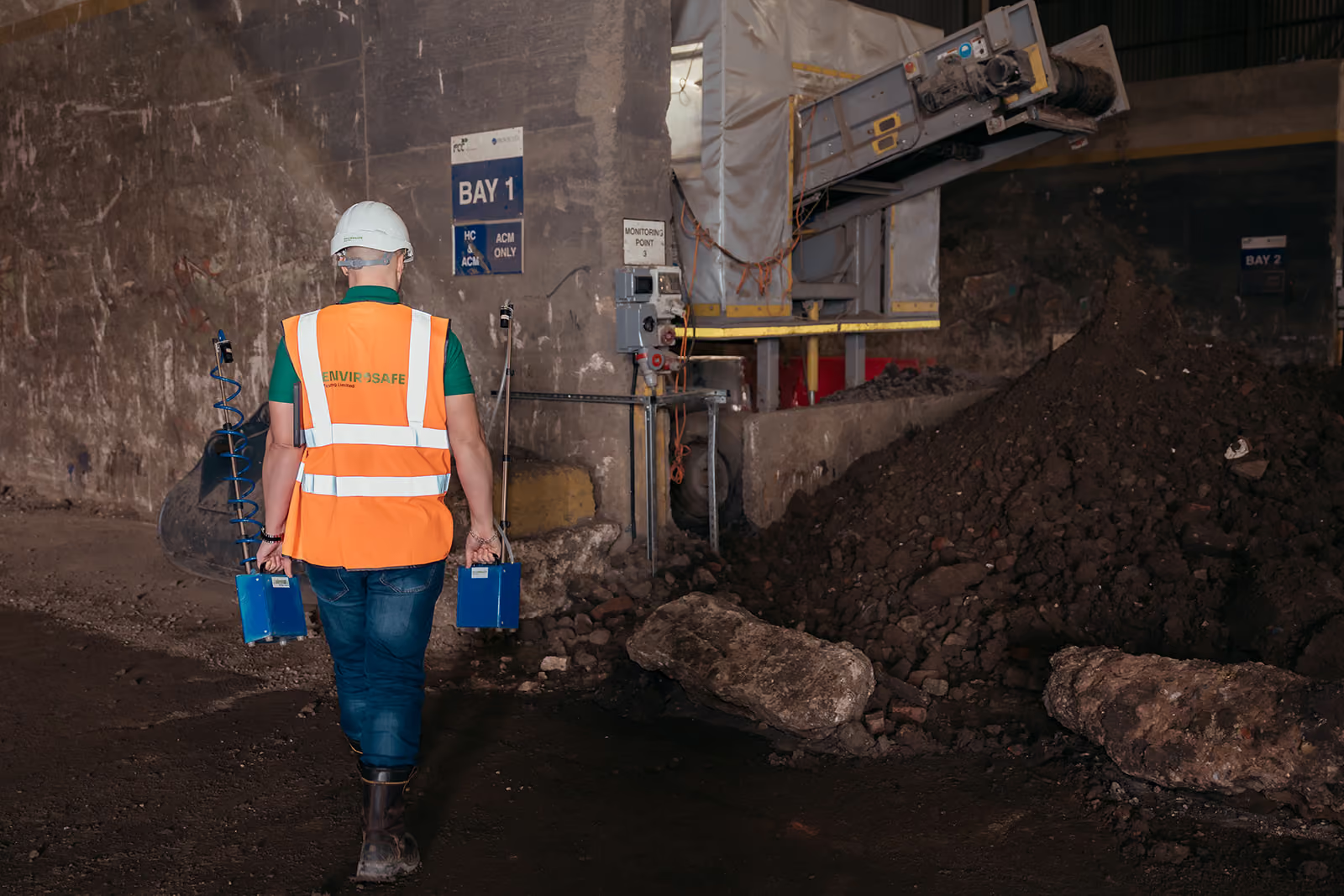
- Debris and fragments found within buildings or soils
The analysis determines whether asbestos fibres are present and identifies the asbestos type where applicable.
Why sampling must be representative
A sample result only relates to the material submitted for analysis. Selecting the correct sampling location is therefore critical.
Buildings may contain visually similar materials installed at different times or supplied by different manufacturers. One section may contain asbestos while another apparently identical section does not. Layered materials can also include asbestos within coatings, adhesives, backing products or insulation that may not be immediately visible.
A competent sampling strategy should consider:
- The type and condition of the material
- Variations in colour, texture and installation
- Different rooms, areas or construction phases
- Multiple layers within the same product
- The extent and purpose of the proposed works
- The potential for disturbance during sampling
Where representative sampling cannot be completed safely, the material may need to be presumed to contain asbestos until further assessment is possible.
The sampling and analysis process
Before taking a sample, the analyst assesses the material, the surrounding area and the potential for fibre release. Appropriate controls are then used to minimise disturbance and protect occupants, workers and other site users.
Each sample is securely packaged, clearly labelled and recorded to maintain traceability from collection through to reporting. Relevant information may include the precise sample location, material description, condition and photographs.
Within the laboratory, the sample is examined using recognised analytical techniques to determine whether asbestos is present and identify the fibre type.
Understanding the results
A bulk analysis report will normally confirm the sample reference, material description, location and analytical result.
The principal regulated asbestos types commonly identified in building materials are:
Chrysotile - Often referred to as white asbestos and historically used within cement products, floor tiles, textured coatings and other manufactured materials.
Amosite - Commonly known as brown asbestos and frequently associated with insulating board, ceiling tiles and thermal insulation products.
Crocidolite -Often called blue asbestos and historically used within certain insulation, cement and high-performance products.
Other asbestos fibre types may also be identified where present.
A positive result confirms that the submitted material contains asbestos. It does not, by itself, determine the complete level of risk. The material’s condition, accessibility, location and likelihood of disturbance must also be considered.
When should bulk sampling be undertaken?
Bulk sampling may be appropriate when:
- A suspect material is discovered during maintenance or construction
- Existing asbestos information is incomplete or unavailable
- Materials must be identified before intrusive works begin
- Damage or accidental disturbance has occurred
- Additional samples are required to confirm the extent of an identified material
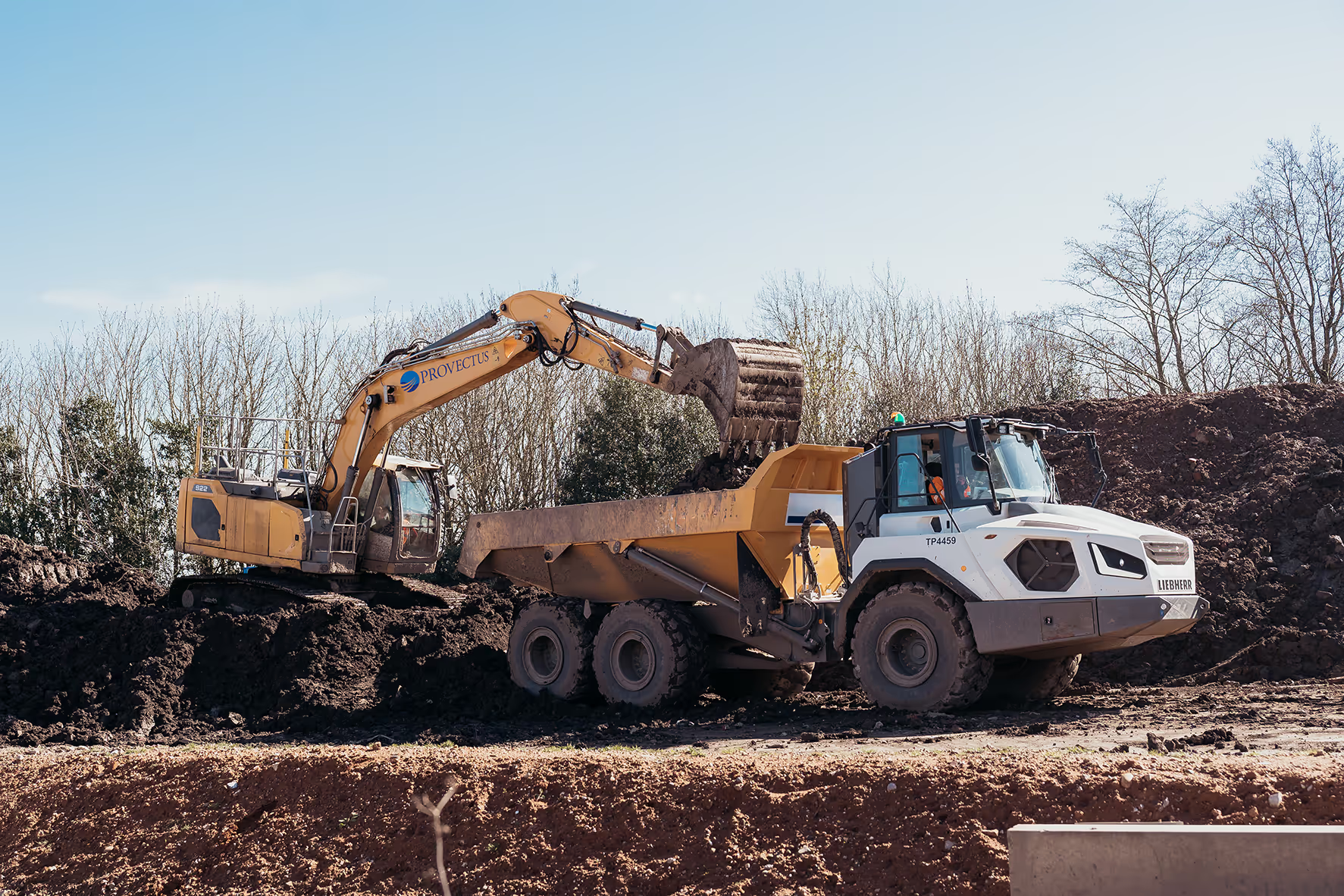
- Suspect fragments are found within demolition debris, made ground or soil
- Waste classification or remediation decisions require further evidence
Sampling should form part of a planned asbestos management or project-specific investigation rather than being treated as a substitute for a suitable asbestos survey.
Rapid results to support live projects
Delays in identifying suspect materials can disrupt programmes, restrict access and create uncertainty for contractors and building users.
Envirosafe provides responsive bulk sample collection and analysis supported by experienced analysts and mobile laboratory capability. This allows samples to be assessed rapidly, helping clients make informed decisions and maintain progress while appropriate safety controls remain in place.
Our reporting is clear and practical, providing the information required to support asbestos management, removal planning, remediation and wider project delivery.
Why choose Envirosafe?
Envirosafe combines technical expertise with responsive service and nationwide coverage. We support individual property assessments, construction projects, remediation schemes and multi-site programmes with reliable sampling, analysis and technical advice.
Our focus is straightforward: accurate identification, clear reporting and practical support that protects people and keeps projects moving.
Have you discovered a suspect material? Contact Envirosafe for bulk sample collection, analysis and expert technical support.



Careers
We pride ourselves on being at the forefront of the industry. We offer a dynamic and supportive work environment where innovation, collaboration, and professional growth are highly valued.


